When you step into a Pilates class, you may often hear the phrase “find your neutral spine.” It’s one of the most fundamental principles of Pilates and is the foundation for safe and effective movement. But what exactly does “neutral spine” mean, and why does it matter so much for your health, posture, and overall well-being?
In this blog, we’ll explore the concept of the neutral spine, why it is important, and how Pilates helps you find and maintain it—not just during exercise, but in your everyday life.
What is the Neutral Spine?
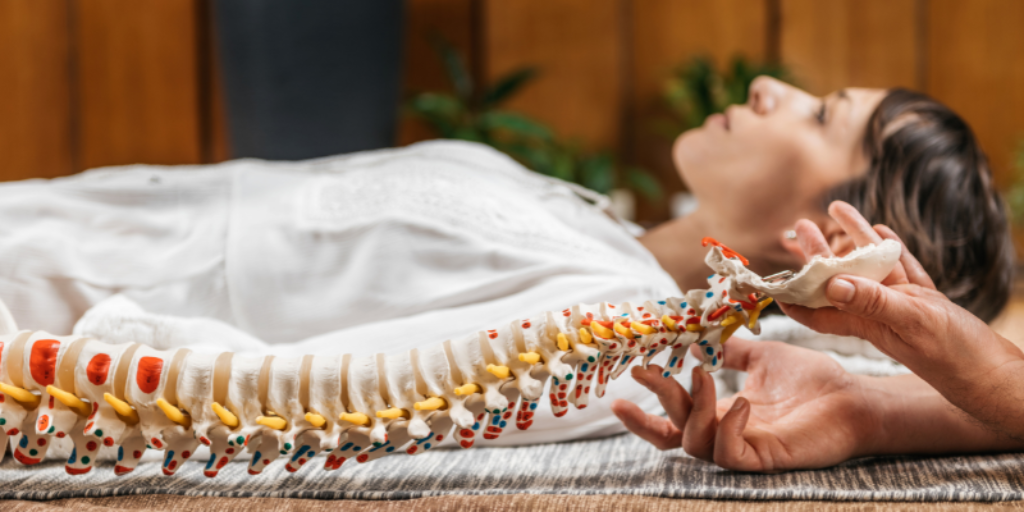
Your spine has three natural curves:
- The cervical curve in the neck,
- The thoracic curve in the upper back, and
- The lumbar curve in the lower back.
When these curves are properly aligned and balanced, your spine is in what’s called a neutral position. It’s neither overly arched nor completely flattened. Instead, it’s the position where your spine can best absorb force and support movement.
Think of it like this: your neutral spine is your body’s “home base.” From this position, your muscles, joints, and ligaments work together in harmony, reducing unnecessary strain.
Why is a Neutral Spine Important?
Many of us spend hours each day sitting at desks, looking down at phones, or standing in positions that place stress on our backs. Over time, these habits can lead to poor posture, muscular imbalances, pain, and even injury.
Finding and maintaining a neutral spine offers numerous benefits:
- Protects against injury: It distributes load evenly through your spine and joints.
- Improves posture: It helps you stand taller and move more efficiently.
- Supports core activation: When your spine is in a neutral position, your deep abdominal muscles and pelvic floor are activated more effectively.
- Enhances balance and coordination: A neutral spine provides stability for controlled movement.
- Reduces back pain: Many people with chronic lower back pain find relief through learning to maintain neutral alignment.
In short, it’s the foundation of good movement—and Pilates is one of the best methods for mastering it.
Neutral Spine in Pilates
Joseph Pilates, the founder of Pilates, believed that good health begins with a strong, flexible spine. That’s why so many Pilates exercises are designed around finding and maintaining spinal alignment.
When practicing Pilates, instructors often guide clients to find their neutral spine by lying on their backs with knees bent and feet flat. The lower back should maintain its natural curve—so if you slide your hand under your lower back, there should be a small space, not a large arch or total flattening.
This awareness carries through every exercise, whether you’re lying on the mat, standing, or moving on a reformer. The neutral spine becomes a reference point, ensuring that your body is supported and working as intended.
Core Connection and Neutral Spine
You’ve probably heard the phrase “engage your core” in a Pilates class. But the core isn’t just your abdominals—it also includes your pelvic floor, diaphragm, and deep stabilizing muscles that wrap around your spine.
The neutral spine makes it easier to access these muscles because your body is aligned in a way that allows them to activate naturally. Instead of gripping or forcing movement, you learn to stabilize gently, with precision and control.
This is why Pilates often feels so different from traditional abdominal workouts. Rather than pushing your body into extremes, you’re training it to move in balance and harmony.
Everyday Benefits of Neutral Spine
Pilates teaches you how to recognize and maintain neutral spine alignment not only in class, but in daily life. This awareness can transform how you sit, stand, walk, and move throughout the day.
- At your desk: Sitting with a neutral spine reduces slouching and tension in the shoulders.
- While driving: Neutral alignment helps keep the lower back supported.
- During exercise: Whether running, lifting weights, or practicing yoga, a neutral spine prevents unnecessary strain.
- At home: Everyday tasks like bending to pick something up or reaching overhead become safer and more efficient.
In short, Pilates trains your body to make neutral alignment second nature.
How to Find Your Neutral Spine
If you’re new to Pilates, here’s a simple way to explore your neutral spine at home:
- Lie down on your back with your knees bent and feet flat on the floor.
- Place your hands on your hips and notice the position of your pelvis.
- Gently tilt your pelvis forward, creating a bigger arch in your lower back. Then tilt it back, pressing your lower back into the mat.
- Slowly move between these two extremes until you find the midpoint—that’s your neutral spine.
- From here, focus on breathing deeply and gently engaging your abdominals to support the position.
With practice, you’ll begin to recognize this position more easily, whether lying down, sitting, or standing.
Pilates as a Path to Long-Term Spinal Health
One of the most empowering aspects of Pilates is that it’s not just about exercise—it’s about education. Each session teaches you something about how your body works and how to move in ways that support your long-term health.
By learning to find and maintain a neutral spine, you develop a deeper understanding of your posture and movement habits. Over time, this awareness helps correct imbalances, reduce pain, and improve overall quality of life.
Pilates is also adaptable, making it accessible for people of all ages and fitness levels. Whether you’re an athlete looking to enhance performance, someone recovering from an injury, or simply hoping to move with more ease, focusing on neutral spine alignment through Pilates is a powerful step toward better health.
The neutral spine is more than just a Pilates principle—it’s the foundation of healthy movement. By practicing Pilates, you learn how to recognize, maintain, and move from this optimal alignment, both during exercise and in your daily life.
Through consistent practice, you’ll not only build strength and flexibility but also develop greater awareness of your body, improve your posture, and have lasting spinal health.
At our studio, we emphasize the importance of the neutral spine in every class, guiding you to move safely, effectively, and with confidence. Whether you’re a beginner or an experienced Pilates practitioner, learning to find your neutral spine is one of the most valuable investments you can make for your body’s well-being.
So next time you roll out your mat or step onto the reformer, take a moment to find your neutral spine. It’s your home base, your anchor, and your pathway to moving through life with strength, balance, and grace.